Introduction
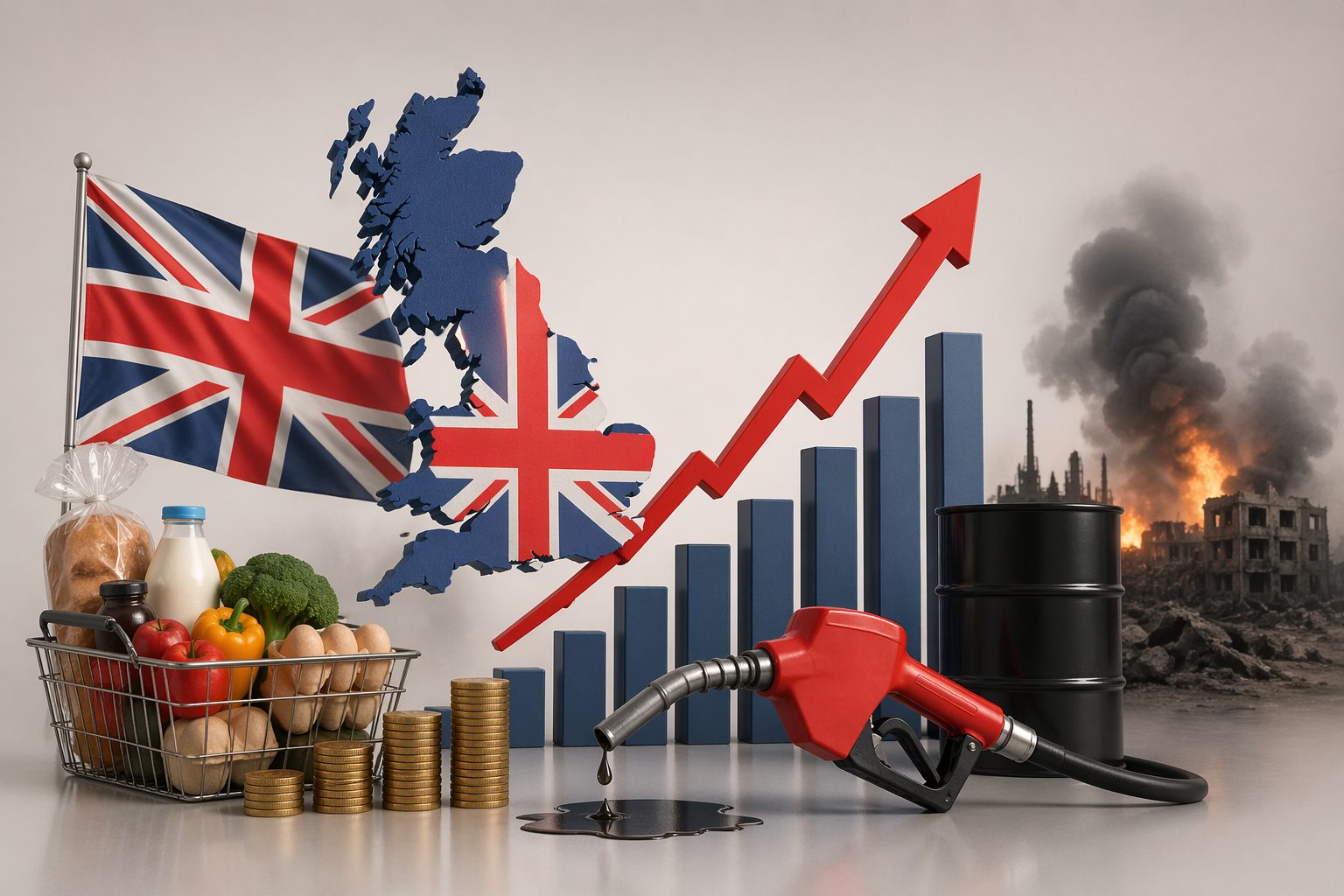
The global economy in 2026 is entering a period of renewed uncertainty as rising fuel prices and geopolitical tensions begin to reshape financial stability and economic outlooks. The United Kingdom has become a key example of these pressures, with inflation rising unexpectedly to 3.3 percent in March 2026. This increase marks a reversal of earlier expectations that inflation would gradually decline, signaling that external shocks are once again influencing domestic economies in powerful ways. The primary driver of this shift is the surge in fuel prices, which has been closely linked to escalating tensions in the Middle East. These developments are not only affecting the UK but are also sending ripple effects across global markets, highlighting how interconnected modern economies have become.
Rising Inflation And The Impact Of Fuel Prices
Fuel prices have played a central role in pushing inflation higher in the UK. A sharp increase in petrol and diesel costs has significantly contributed to the overall rise in consumer prices. This surge represents one of the most substantial monthly increases in fuel costs in recent years, driven largely by disruptions in global oil supply chains.
As fuel prices rise, transportation costs increase across all sectors of the economy. Businesses that rely on logistics and distribution face higher expenses, which are often passed on to consumers in the form of increased prices for goods and services. This creates a cascading effect where inflation spreads beyond energy into sectors such as food, retail, and manufacturing.
Households are particularly affected by this trend. Higher fuel costs mean increased commuting expenses and more expensive goods, reducing overall purchasing power. For many families, this results in tighter budgets and a need to adjust spending habits, further slowing economic activity. Inflation, therefore, becomes both a symptom and a driver of broader economic challenges.
Geopolitical Conflict And Energy Market Disruption
The surge in fuel prices can be traced back to rising geopolitical tensions in the Middle East, a region that plays a critical role in global energy supply. Key oil transportation routes have become increasingly unstable due to military activity and strategic conflicts. This has created uncertainty in global oil markets, leading to price volatility and supply concerns.
One of the most significant factors is the disruption of major shipping routes used for transporting oil. When these routes are threatened or restricted, global supply is reduced, and prices rise in response to perceived scarcity. Even the possibility of disruption can cause markets to react sharply, as traders and investors anticipate future shortages.
Temporary measures such as ceasefire agreements have provided brief relief in oil prices, but these developments have not been enough to restore long term stability. The ongoing nature of the conflict means that uncertainty remains high, and energy markets continue to react to every new development. This persistent instability has made it difficult for governments and businesses to plan effectively.
Economic Consequences For The United Kingdom
The rise in inflation has significant implications for the UK economy. One of the most immediate concerns is the pressure on government finances. Increased energy costs and economic uncertainty reduce the government’s fiscal flexibility, limiting its ability to respond to future crises or invest in public services.
Higher inflation also affects borrowing and interest rates. As prices rise, central banks may consider increasing interest rates to control inflation. However, this can make borrowing more expensive for businesses and households, slowing down investment and economic growth. Mortgage holders, in particular, may face higher monthly payments, adding to financial strain.
For businesses, rising costs create a challenging environment. Companies must decide whether to absorb increased expenses or pass them on to consumers. Both options have consequences, either reducing profit margins or risking a decline in demand. This uncertainty can lead to reduced investment and hiring, further impacting the economy.
Monetary Policy Challenges And Central Bank Decisions
The Bank of England faces a complex situation as it responds to rising inflation. Traditionally, central banks use interest rate increases as a tool to control inflation. By making borrowing more expensive, demand is reduced, which can help stabilize prices.
However, the current situation presents a difficult balance. While inflation is rising, economic growth remains fragile due to global uncertainty. Increasing interest rates too aggressively could slow the economy further, potentially leading to stagnation. On the other hand, failing to act could allow inflation to become entrenched, creating long term economic problems.
This delicate balance requires careful decision making. Policymakers must consider both short term pressures and long term economic stability. The risk of stagflation, where inflation remains high while growth slows, is a key concern in this context.
Impact On Financial Markets And Investor Confidence
Financial markets have reacted cautiously to the rise in inflation and ongoing geopolitical tensions. Stock markets have shown signs of volatility, with investors closely monitoring developments in both energy prices and global conflict.
Sectors that are particularly sensitive to economic conditions, such as manufacturing and financial services, have experienced fluctuations in performance. At the same time, energy companies may benefit from higher oil prices, creating uneven impacts across different industries.
Investor confidence plays a crucial role in economic stability. When uncertainty increases, investors tend to adopt a more cautious approach, which can lead to reduced market activity and slower economic growth. This cautious sentiment can also affect currency values and international trade.
Government Response And Regulatory Measures
In response to rising inflation and energy costs, the UK government is considering various regulatory measures to protect consumers and stabilize the economy. These measures may include adjustments to energy pricing systems, targeted subsidies, and policies aimed at reducing the impact of rising costs on households.
While such interventions can provide short term relief, they also come with challenges. Government support programs require funding, which can increase public debt. Additionally, excessive intervention in markets can sometimes lead to unintended consequences, such as reduced efficiency or distorted pricing signals.
Despite these challenges, government action is often necessary during periods of crisis. The key is to strike a balance between providing immediate support and maintaining long term economic sustainability.
Global Economic Ripple Effects
The situation in the UK reflects a broader global trend. Rising fuel prices and geopolitical tensions are affecting economies around the world. Countries that rely heavily on imported energy are particularly vulnerable, as they face higher costs and potential supply disruptions.
Developing economies may experience even greater challenges, as they often have fewer resources to absorb price shocks. In some cases, rising fuel costs can lead to economic instability and social unrest, highlighting the far reaching impact of energy market disruptions.
The interconnected nature of global trade means that economic challenges in one region can quickly spread to others. This underscores the importance of international cooperation in addressing global economic issues.
Long Term Implications For Energy Policy
The current crisis is likely to influence energy policy for years to come. Governments may accelerate efforts to reduce dependence on imported fossil fuels and invest in alternative energy sources. Renewable energy, in particular, is expected to play a larger role in future energy strategies.
By diversifying energy sources, countries can reduce their vulnerability to geopolitical risks and improve long term stability. Investments in renewable energy infrastructure, such as solar and wind power, can also contribute to environmental goals and sustainable development.
At the same time, the crisis highlights the need for more resilient energy systems. This may involve strengthening domestic production, improving storage capabilities, and enhancing international cooperation on energy security.
Conclusion
The rise in UK inflation to 3.3 percent in March 2026 illustrates the powerful impact of fuel prices and geopolitical conflict on modern economies. What began as a regional conflict has evolved into a global economic challenge, affecting everything from household budgets to government policy. As the situation continues to develop, policymakers, businesses, and consumers must adapt to a rapidly changing environment. The challenges are significant, but they also present an opportunity to rethink energy systems, strengthen economic resilience, and build a more stable future.
The events of 2026 serve as a reminder that economic stability depends not only on domestic factors but also on global conditions. In an interconnected world, managing these challenges requires careful planning, cooperation, and a willingness to adapt to new realities.