Introduction
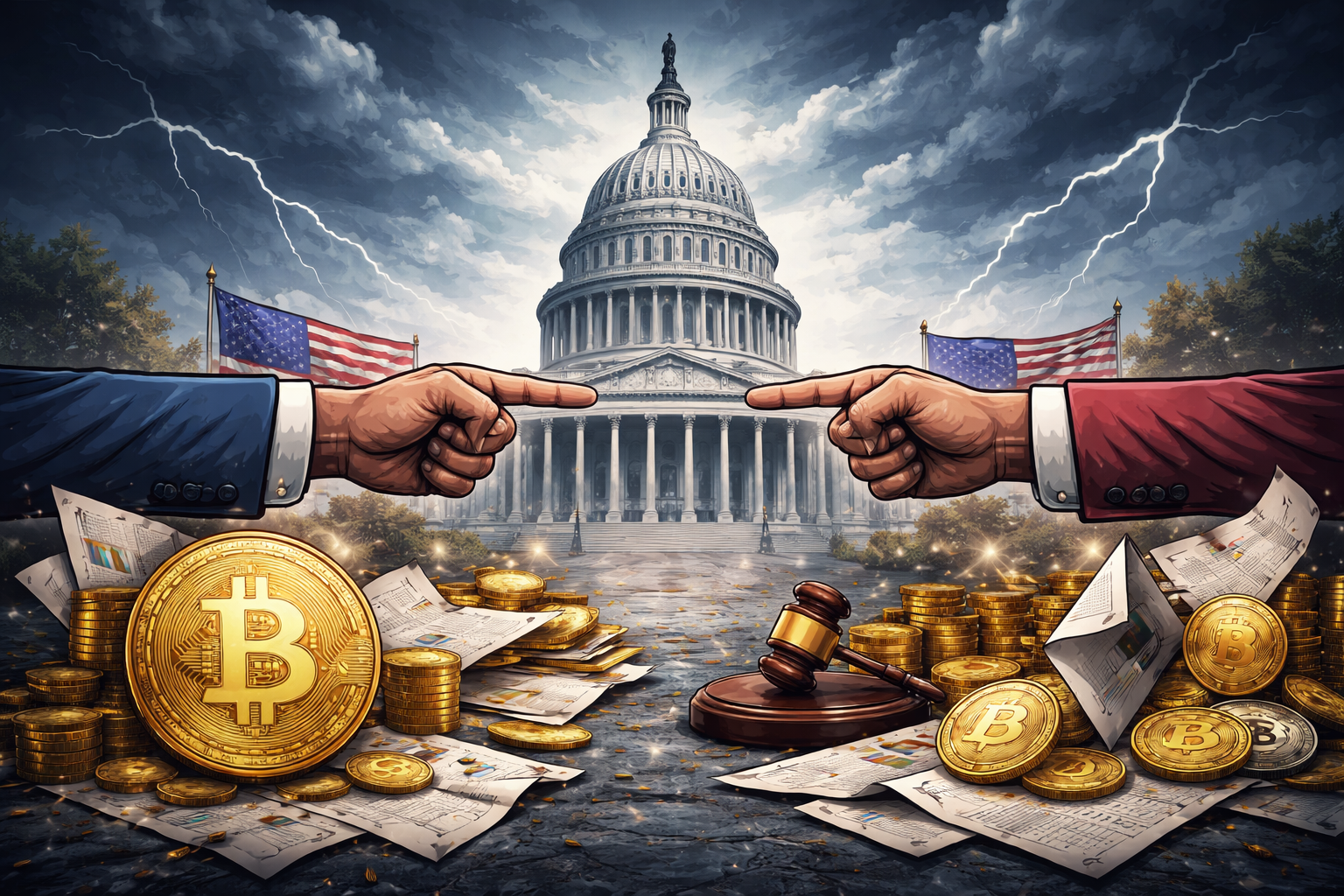
The United States is at a pivotal moment in shaping the future of cryptocurrency regulation. For years, digital assets have existed in a gray zone where innovation moved faster than lawmaking, and enforcement often replaced clarity. Now, the Senate is attempting to change that with a comprehensive crypto market structure bill designed to define how digital assets are classified, who regulates them, and how trading platforms and financial products should operate. While the draft is seen by many as pro-crypto in spirit, it has also sparked intense debate, political resistance, and growing concern from both industry leaders and Democratic lawmakers. What was once viewed as a historic opportunity for regulatory clarity now faces uncertainty about whether it can survive the legislative process in its current form.
Why Does Market Structure Matters For Crypto?
Market structure refers to the rules that define how assets are issued, traded, and supervised. In traditional finance, this includes stock exchanges, broker-dealers, clearinghouses, and regulators. Crypto, however, operates on decentralized networks that don’t fit neatly into those models. Without a market structure framework, crypto companies face uncertainty about what rules apply to them, which regulator they answer to, and how they should design products.
The Senate’s bill aims to bring order to this chaos. It seeks to define what makes a token a security versus a commodity, how trading platforms should register, and how custody, disclosures, and consumer protections should work in a digital asset context. Supporters argue that this will attract institutional investment, keep innovation in the United States, and protect retail investors from fraud and market manipulation.
But critics worry that poorly designed rules could either stifle innovation or fail to address the real risks. The challenge is finding the balance between freedom and oversight in a technology that was built to operate without centralized control.
Political Divisions And Bipartisan Challenges
One of the biggest obstacles facing the bill is political division. While many Republicans support a more innovation-friendly approach to crypto, Democrats tend to prioritize consumer protection, financial stability, and anti-money-laundering controls. These priorities are not mutually exclusive, but they often lead to very different legislative designs.
The current draft reportedly includes provisions that protect developers from liability and reduce regulatory overlap, which appeals to pro-innovation lawmakers. However, many Democrats feel the bill does not go far enough in addressing risks associated with decentralized finance, stablecoins, and speculative trading. They worry that without strong safeguards, the crypto market could repeat the kinds of failures that led to massive investor losses in past cycles.
Because the Senate requires a supermajority to move most legislation forward, the lack of Democratic support is a serious problem. Without bipartisan backing, the bill could stall indefinitely or be forced into major revisions.
Coinbase Withdraws Support And Industry Frustration
A major turning point came when one of the largest crypto companies in the United States withdrew its support for the bill. Coinbase, which had previously engaged in discussions around regulatory clarity, publicly stated that the draft would leave the industry worse off than the current environment. According to its leadership, the bill includes provisions that could effectively ban tokenized securities, restrict decentralized finance applications, and give too much authority to traditional regulators who may not understand crypto technology.
This move sent shockwaves through the industry. Coinbase is not just a large exchange; it is a major political and regulatory voice for crypto in Washington. Its opposition suggests that the bill, as written, may not reflect the needs of the companies it is supposed to regulate. Many in the industry now fear that the legislation could lock in a framework that favors traditional finance while limiting crypto’s core innovations.
The backlash also led to delays in the Senate’s legislative process, as committees reconsidered whether the bill was ready to move forward.
Stablecoins At The Center Of The Debate
One of the most controversial parts of the bill concerns stablecoins. These are digital assets pegged to the value of traditional currencies like the US dollar. Stablecoins are widely used in crypto trading, payments, and decentralized finance.
Lawmakers and banks worry that if stablecoins offer interest-like rewards, they could pull money out of traditional bank deposits and disrupt the financial system. As a result, the draft bill reportedly includes restrictions on how stablecoin issuers can offer yields or incentives.
Crypto advocates argue that these restrictions protect banks rather than consumers. They believe stablecoins are simply new financial tools and should be allowed to compete with traditional products. This clash reflects a broader struggle between legacy finance and digital finance over who gets to define the future of money.
DeFi And The Limits Of Regulation
Decentralized finance, or DeFi, is another area of concern. DeFi platforms allow users to trade, lend, and borrow crypto without intermediaries. They operate through smart contracts rather than traditional companies.
Regulating DeFi is difficult because there is often no central entity to hold accountable. Some lawmakers want to impose rules on developers, interfaces, or users. Others fear that doing so would undermine the entire concept of decentralization.
The bill attempts to address DeFi, but critics argue that it does so in a way that could unintentionally ban or severely restrict many decentralized applications. This is one reason why industry leaders are uneasy about the current draft.
The Role Of Traditional Finance And Lobbying
Banks and financial institutions have a strong interest in how crypto is regulated. They want rules that prevent unfair competition, protect deposit bases, and ensure financial stability. As a result, they have actively lobbied lawmakers on stablecoin rules, custody standards, and compliance requirements.
Some in the crypto industry see this as an attempt to shape regulation in favor of legacy systems. They argue that instead of embracing innovation, traditional finance is trying to slow it down. This tension is deeply embedded in the debate over the market structure bill.
What This Means For Investors And Markets?
For investors, regulatory clarity is usually a positive thing. Clear rules reduce uncertainty and attract institutional money. However, if those rules are too restrictive, they can limit innovation and growth.
Right now, the uncertainty surrounding the bill adds another layer of risk to the crypto market. Companies don’t know what the future rules will look like, and investors don’t know how regulation might affect prices, products, and platforms.
Some firms are delaying launches, others are exploring moving operations overseas, and many are waiting to see how the political process plays out.
The Road Ahead For Crypto Legislation
The future of the Senate’s crypto market structure bill is still undecided. Lawmakers must decide whether to revise the draft to attract broader support or risk letting it die. Industry leaders want more engagement and technical understanding from policymakers. Democrats want stronger consumer protections. Banks want stability. Crypto innovators want freedom.
Finding a framework that satisfies all of these groups is extremely difficult, but the stakes are high. The United States has the opportunity to lead in digital finance, but only if it creates rules that are fair, flexible, and forward-looking.
Conclusion
The Senate’s crypto market structure bill represents both hope and tension. It is a serious attempt to bring clarity to a fast-moving industry, but it also exposes deep disagreements about how crypto should fit into the financial system. With major industry players withdrawing support and political divisions widening, the bill now stands at a crossroads. Whether lawmakers can bridge these gaps will determine not only the fate of this legislation, but the future of crypto innovation in the United States.