Introduction
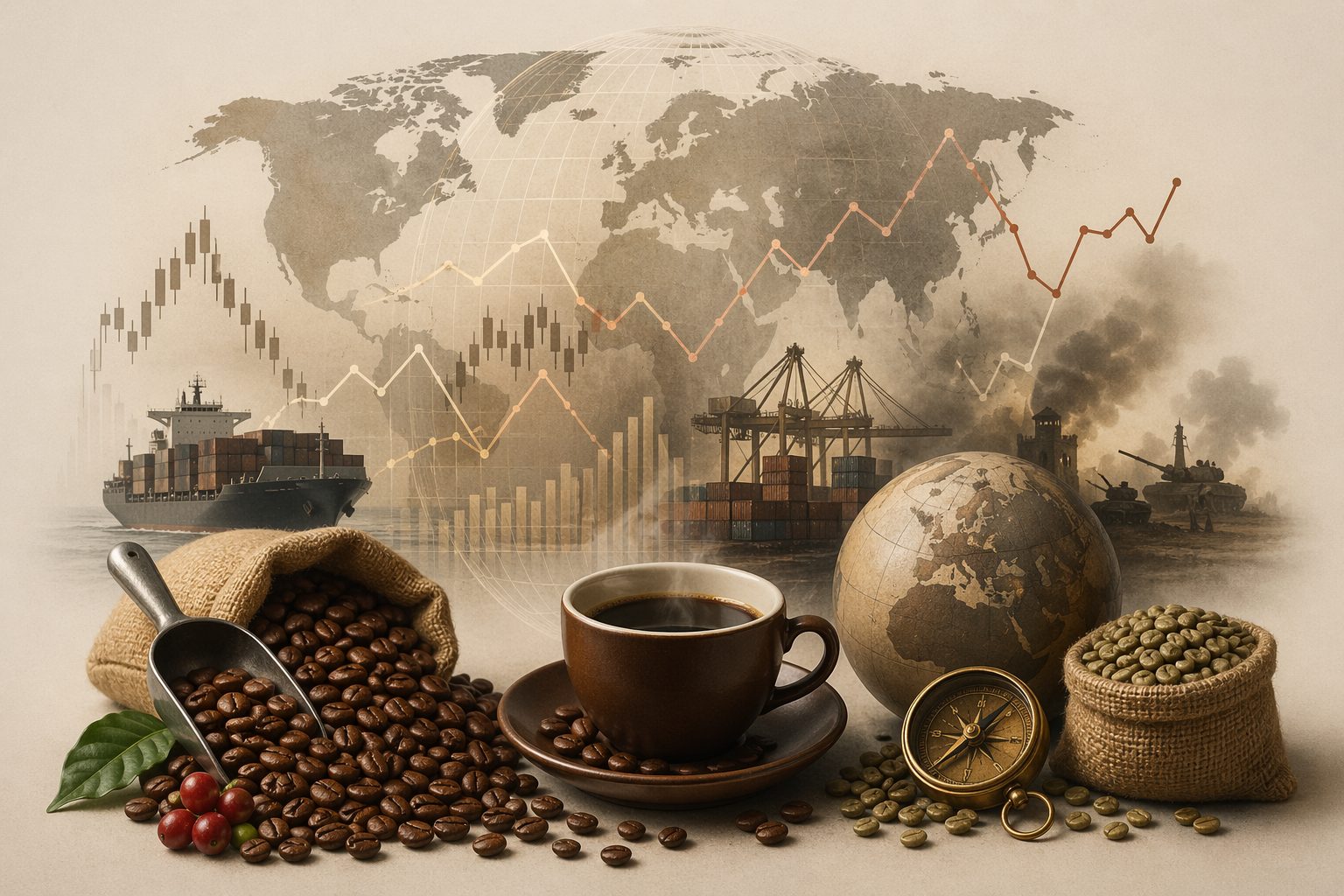
The global coffee market in 2026 is navigating a period of notable uncertainty marked by fluctuating prices, shifting supply chains and the growing influence of geopolitical tensions. Coffee remains one of the most widely traded agricultural commodities in the world supporting millions of livelihoods across producing nations while serving as a daily staple for consumers globally. However recent developments have revealed just how sensitive this market is to external disruptions. From shipping challenges in key transit routes to broader macroeconomic pressures the coffee industry is experiencing a complex phase of adjustment. Data released by the International Coffee Organization highlights both short term price rebounds and longer term declines underscoring the volatile nature of the current market environment.
Understanding Recent Price Fluctuations
Coffee prices have shown noticeable fluctuations in recent months reflecting the interplay between supply constraints and external geopolitical developments. One of the most significant factors contributing to this volatility has been disruptions in shipping routes particularly in the Middle East. These disruptions have impacted global logistics networks causing delays increased transportation costs and uncertainty among traders. Since coffee is heavily dependent on efficient global shipping any interruption along key routes can have cascading effects on availability and pricing.
The ICO Composite Indicator Price which serves as a benchmark for global coffee prices recorded a modest increase in March 2026. This rise suggests a temporary rebound driven largely by concerns over supply chain disruptions rather than a fundamental improvement in market conditions. Traders and investors reacted quickly to news of shipping instability leading to short term price support. However such increases are often fragile and can reverse quickly if underlying issues persist or if demand weakens.
The Role Of Geopolitical Tensions
Geopolitical tensions have emerged as a major driver of market instability in the coffee sector. Conflicts and political uncertainties in key regions have disrupted trade routes and increased the cost of shipping goods across continents. The Middle East in particular plays a crucial role as a transit hub for global trade including coffee shipments from Africa and Asia to Europe and beyond. Any disruption in this region can lead to delays rerouting of shipments and higher freight costs all of which contribute to price volatility.
In addition to logistical challenges geopolitical tensions can also influence currency exchange rates which in turn affect coffee prices. Many coffee producing countries rely heavily on exports and fluctuations in currency values can impact their competitiveness in international markets. A stronger local currency may reduce export earnings while a weaker currency can make exports more attractive but also increase the cost of imported inputs such as fertilizers and equipment. Furthermore geopolitical uncertainty often leads to speculative trading behavior in commodity markets.
Supply Chain Challenges And Export Trends
Supply chain disruptions have become a defining feature of the coffee market in recent years and 2026 is no exception. According to data from the International Coffee Organization global coffee exports declined by approximately five point seven percent in February 2026 compared to the same period in the previous year. This decline reflects a combination of logistical bottlenecks production challenges and shifting trade dynamics.
In some producing regions adverse weather conditions have affected crop yields leading to reduced supply. Climate variability including irregular rainfall patterns and extreme temperatures continues to pose a significant threat to coffee production particularly for smallholder farmers who lack the resources to adapt effectively. These production challenges are compounded by logistical issues such as port congestion container shortages and increased shipping costs.
Long Term Price Trends And Market Dynamics
While short term fluctuations often capture headlines it is the long term trends that provide deeper insights into the health of the coffee market. The approximately twenty five percent decline in prices over the past year reflects a broader adjustment following earlier periods of high prices. During times of elevated prices producers are often incentivized to increase production which can eventually lead to oversupply and downward pressure on prices.
This cyclical nature of commodity markets is evident in the coffee sector where periods of boom are often followed by corrections. However the current situation is further complicated by external factors such as geopolitical tensions and climate change which introduce additional uncertainty into the market.
The Impact On Producers And Farmers
The volatility in coffee prices has significant implications for producers particularly smallholder farmers who form the backbone of the global coffee industry. For these farmers price fluctuations can directly impact their income and livelihoods making it difficult to plan for the future or invest in improvements.
When prices are high farmers may benefit from increased but these gains can be short lived if prices decline rapidly. Conversely prolonged periods of low prices can lead to financial stress forcing farmers to cut costs reduce investment in their farms or even abandon coffee production altogether. This can have long term consequences for the sustainability of the industry as reduced investment may lead to lower productivity and quality over time.
Market Outlook And Future Prospects
Looking ahead the outlook for the coffee market remains uncertain with both risks and opportunities on the horizon. Geopolitical tensions are likely to continue influencing market dynamics particularly if disruptions to key shipping routes persist. At the same time efforts to diversify supply chains and improve logistics may help mitigate some of these challenges over time.
Climate change is expected to remain a major factor affecting coffee production with potential impacts on both yield and quality. Investments in research and development as well as the adoption of climate resilient farming practices will be essential to ensure the long term sustainability of the industry.
Conclusion
The global coffee market in 2026 is characterized by a complex interplay of factors including price volatility, geopolitical tensions, supply chain disruptions and evolving demand patterns. While recent data from the International Coffee Organization indicates a slight rebound in prices the broader trend remains downward with significant fluctuations continuing to shape the market.
Understanding these dynamics is essential for stakeholders across the coffee value chain from farmers and traders to policymakers and consumers. Addressing the challenges facing the industry will require coordinated efforts to enhance resilience, improve sustainability and adapt to changing conditions.